



Starting a business in 2026 looks very different from starting one ten or even five years ago.
A person no longer needs a large office, dozens of employees, or a huge amount of inventory to build a serious business. A laptop, smartphone, internet connection, a useful skill, and a clear understanding of customer problems can be enough to get started in many industries.
But that does not mean every popular business idea is a good business.
Social media is full of posts promising easy money from dropshipping, artificial intelligence, cryptocurrency, affiliate marketing, and other online opportunities. Some of these models can work. Many do not work for the people who approach them without a real plan.
The better question is not, “What business will make me rich quickly?”
A more useful question is:
“What products or services are people actually willing to pay for, and how can I solve that problem better than the alternatives?”
That question becomes particularly important in 2026 because technology is changing the way businesses operate. Artificial intelligence is becoming more common in business functions, e-commerce continues to give small sellers access to customers beyond their local area, cybersecurity is becoming a practical concern even for small companies, and businesses are increasingly looking for ways to operate efficiently and sustainably.
The U.S. Census Bureau’s Business Trends and Outlook Survey reported that overall business AI use remained around 17% to 20% during the December 2025 to May 2026 period, while larger companies reported considerably higher adoption. The same data also showed substantial differences between industries.
That does not mean every entrepreneur should start an AI company.
It means there is a growing market for businesses that can help ordinary companies use technology more effectively.
In this article, we will explore five business opportunities that deserve serious attention in 2026:
- AI-powered business services
- Niche e-commerce and private-label products
- Digital marketing and content services
- Cybersecurity and business technology services
- Sustainable and energy-related businesses
These are not presented as guaranteed money-making machines. Every business has competition, expenses, risks, and the possibility of failure.
Instead, these are areas where there are clear customer problems, changing business needs, and opportunities for entrepreneurs who are prepared to learn and execute well.
- AI-Powered Business Services
Artificial intelligence is one of the biggest changes affecting modern businesses.
But there is an important misunderstanding about the opportunity.
You do not necessarily need to invent a new AI model to build a business around artificial intelligence.
In fact, many entrepreneurs may have a better opportunity by helping existing businesses use AI tools.
Think about a small restaurant owner.
The owner may know how to prepare excellent food but may not know how to create an effective social media calendar, analyze customer feedback, write promotional emails, organize customer inquiries, or automate repetitive administrative work.
A small online store may have hundreds of customer messages every month but no dedicated customer-service department.
A real-estate agent may spend hours creating property descriptions, social posts, email campaigns, and follow-up messages.
A local service company may have plenty of customer information but no efficient system for organizing it.
These are problems that technology can help solve.

What does an AI business actually sell?
The product is not necessarily “AI.”
The product is the result.
A business owner does not care that you used an advanced language model to create a marketing system.
They care that the system saves time, improves communication, generates leads, organizes information, or reduces repetitive work.
That difference is extremely important.
For example, an entrepreneur could build a service that helps local businesses with:
- AI-assisted customer support
- Social media content creation
- Email marketing
- Product descriptions
- Business document preparation
- Data organization
- Appointment reminders
- Frequently asked questions
- Internal knowledge bases
- Basic workflow automation
- Market research assistance
- Customer review analysis
The exact service should depend on the customer’s problem.
Why this business has potential
Current business data supports the idea that AI adoption is moving beyond experimentation.
The U.S. Census Bureau reported in May 2026 that businesses with 250 or more employees had an AI-use rate of 37% in the survey period ending May 3, while smaller firms generally reported lower adoption.
That difference creates an interesting opportunity.
Large companies can hire technology specialists.
Small businesses often cannot.
A small business owner may prefer paying an outside specialist to set up a useful system rather than hiring a full-time technology employee.
Research from the Federal Reserve also found that nearly 40% of small-business respondents in its 2024 Small Business Credit Survey reported either using or planning to use AI. Reported applications included productivity, marketing, customer service, analytics, forecasting, and other functions.
How to start
You do not need to start with a complicated agency.
Choose one customer group.
For example:
AI services for restaurants
or
AI automation for real-estate agents
or
AI content systems for small online stores
Then identify three repetitive problems.
Suppose you target local restaurants.
You might discover that owners struggle with social media content, responding to customer questions, and promoting special offers.
Instead of selling “AI consulting,” you could sell a simple monthly service that handles those specific tasks.
That is much easier for a customer to understand.
What skills do you need?
You need more than knowing how to use ChatGPT or another AI tool.
Useful skills include:
- Understanding customer problems
- Prompt design
- Basic automation
- Content editing
- Research
- Data handling
- Communication
- Sales
- Quality control
Most importantly, you need to verify AI-generated information before delivering it to a client.
AI can make mistakes.
A professional business should never blindly copy AI output into customer-facing material.
The biggest mistake to avoid
Do not build an entire business around the idea that “AI is trending.”
Trends do not automatically create profitable businesses.
Customer problems do.
The strongest AI businesses will probably be those that combine technology with industry knowledge.
If you understand accounting, marketing, restaurants, education, real estate, healthcare administration, manufacturing, or another field, that knowledge can become your advantage.
AI is the tool. The customer’s problem is the business.
- Niche E-Commerce and Private-Label Products
E-commerce remains one of the most accessible ways for entrepreneurs to sell products without opening a traditional retail store.
But there is a major difference between building a real e-commerce brand and simply uploading random products to an online marketplace.
The first is a business.
The second is often just speculation.
In 2026, consumers have an enormous number of choices. They can compare prices, read reviews, watch product demonstrations, and switch between sellers within seconds.
That means a generic store has a difficult job.
A focused brand can have a much stronger position.
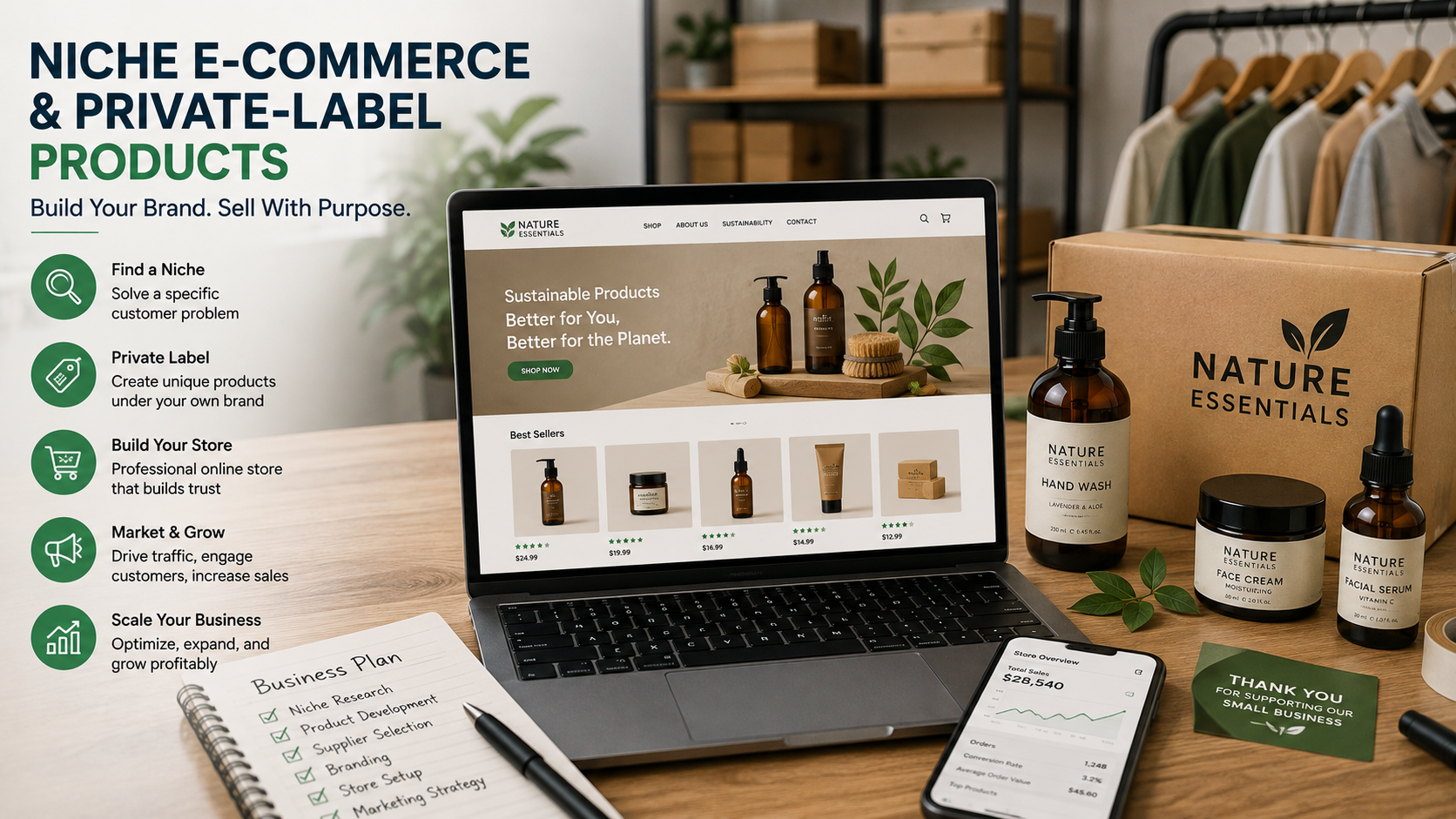
What is a niche e-commerce business?
A niche e-commerce business focuses on a specific type of customer or problem.
Instead of selling everything, you specialize.
Examples could include:
- Travel accessories
- Home organization products
- Pet accessories
- Kitchen tools
- Fitness accessories
- Outdoor products
- Sustainable household products
- Personal accessories
- Hobby-related products
- Office and productivity products
The goal is not simply to choose a category.
The goal is to understand the customer.
Imagine two stores.
Store A sells electronics, clothing, kitchen products, watches, toys, bags, cosmetics, and random gadgets.
Store B sells carefully selected travel accessories for frequent travelers.
Which store is easier to remember?
Usually, Store B.
The second store has a clearer identity.
Why niche matters
A niche allows you to create content around a specific audience.
If your store focuses on travel, you can create articles such as:
“10 Things to Pack for a Seven-Day Trip”
“How to Choose a Carry-On Backpack”
“Best Travel Accessories for Long Flights”
“How to Organize Your Passport and Documents”
The content naturally supports the products.
This creates a relationship between content, search traffic, social media, and sales.
Private label can create another opportunity
Private labeling means selling products manufactured by another company under your own brand, subject to the applicable legal and supplier requirements.
This can allow an entrepreneur to build a recognizable brand instead of competing only on price.
However, private labeling requires careful research.
You need to consider:
- Product quality
- Supplier reliability
- Minimum order quantities
- Shipping costs
- Import duties
- Packaging
- Product regulations
- Returns
- Warranty obligations
- Customer service
- Advertising costs
The cheapest supplier is not necessarily the best supplier.
A poor-quality product can destroy a new brand quickly.
Do not start with 100 products
One of the biggest mistakes new e-commerce entrepreneurs make is buying too much inventory.
A better approach is to test demand.
Choose a small number of products.
Study competitors.
Read customer reviews.
Look for repeated complaints.
Those complaints can reveal opportunities.
For example, customers may repeatedly complain that a particular travel bag has poor zipper quality, uncomfortable straps, or inadequate organization.
That information can help a new brand create a better product specification.
Social commerce is also important
Consumers increasingly discover products through social platforms.
This changes the role of content.
A product photograph alone may not be enough.
Short videos can demonstrate how a product works.
A customer testimonial can explain why it is useful.
A comparison video can show the difference between two designs.
A practical tutorial can introduce the product without feeling like a traditional advertisement.
The key is to demonstrate value.
How to build a stronger e-commerce brand
A good e-commerce business should answer five questions clearly:
Who is the customer?
What problem does the product solve?
Why should the customer trust the brand?
Why is this product better or more suitable than alternatives?
What happens if the customer is unhappy with the purchase?
If your website cannot answer these questions, adding more products will not solve the problem.
E-commerce can be profitable, but it is not passive income.
It requires product research, customer service, marketing, logistics, financial management, and continuous improvement.
That is exactly why serious entrepreneurs should treat it as a real company rather than a quick online experiment.
- Digital Marketing and Content Services
Every business needs customers.
That simple fact creates a long-term opportunity for marketing service providers.
A local restaurant needs people to discover it.
A dentist needs appointments.
A clothing brand needs attention.
An online store needs traffic.
A consultant needs leads.
A hotel needs bookings.
A new software company needs customers.
The channels may change, but the fundamental problem remains the same:
How do we attract the right people and convince them to take action?
This is where digital marketing businesses can create value.
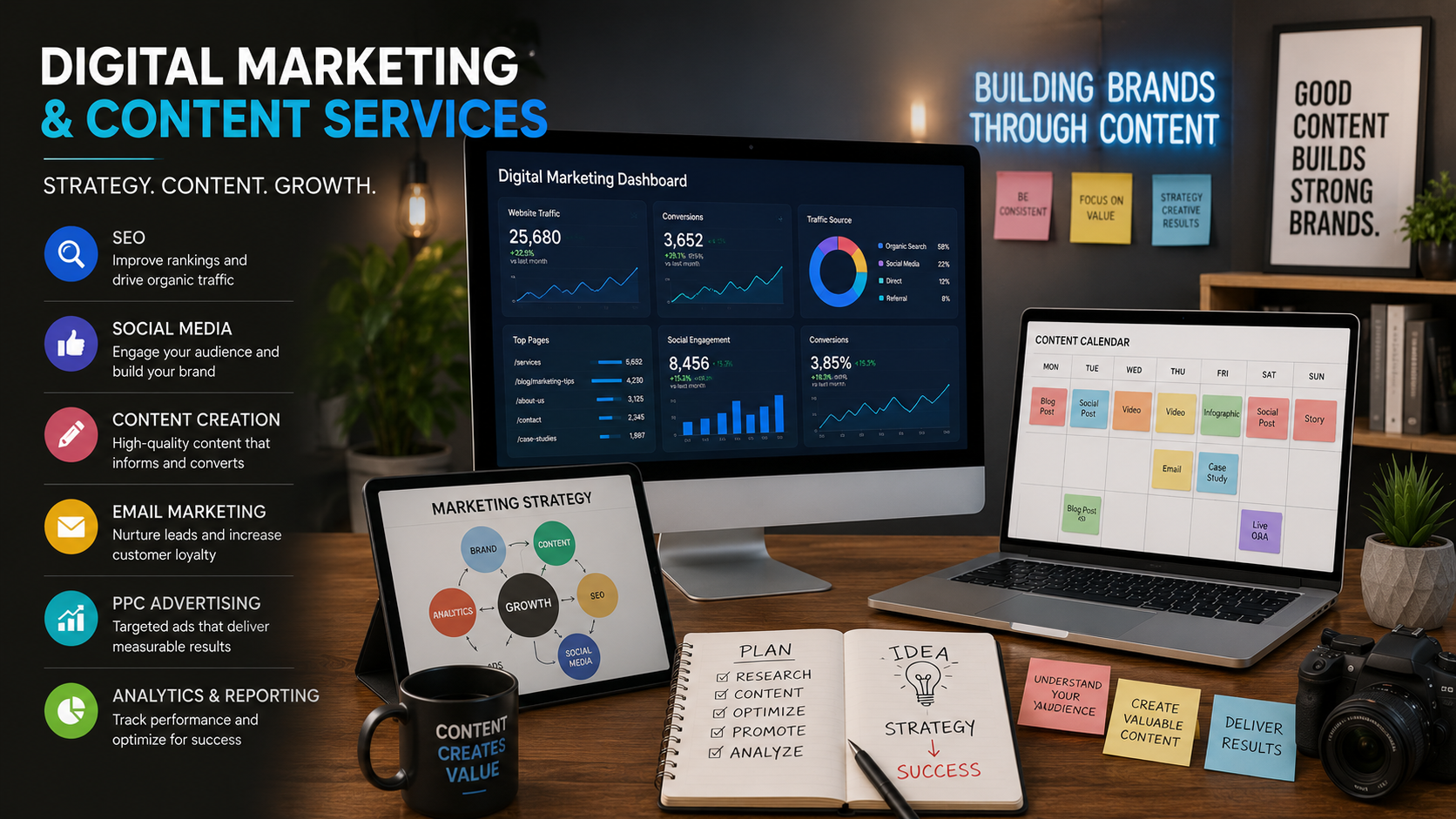
What can a digital marketing company offer?
A small agency does not need to offer everything.
It can specialize in one or two services.
Possible services include:
- Search engine optimization
- Social media management
- Short-form video content
- Email marketing
- Blog content
- Website content
- Local search optimization
- Paid advertising management
- Conversion optimization
- Marketing analytics
- UGC campaign management
- Product photography coordination
A beginner may be tempted to offer every service.
That can create operational problems.
A focused offer is easier to sell and deliver.
Why content remains valuable
The internet is increasingly crowded with content.
That might make content seem less valuable.
The opposite can be true.
When customers have too many choices, useful information becomes more important.
A company that consistently answers customer questions can build trust before the customer ever contacts its sales team.
For example, a company selling air conditioners could publish:
“How Much Electricity Does an Air Conditioner Use?”
“How to Choose the Right AC Size”
“When Should an AC Filter Be Cleaned?”
“Common Air Conditioner Problems”
These articles are not simply advertisements.
They answer real questions.
That is the important part.
AI is changing marketing services
AI can help marketers produce drafts, analyze information, generate ideas, organize campaigns, and accelerate repetitive tasks.
Research from the U.S. Census Bureau indicates that AI is already being used across business functions, while the Federal Reserve’s small-business research shows applications in marketing, social media, SEO, writing, customer service, analytics, and forecasting.
But AI also creates a problem.
If everyone can generate content quickly, simply producing more content becomes less valuable.
The advantage moves toward:
better research + better ideas + better editing + better distribution + better understanding of the customer.
A human marketer who uses AI intelligently can potentially work faster.
A marketer who publishes unverified AI-generated material may damage a client’s reputation.
Local businesses are an especially interesting market
Small local businesses often have limited marketing resources.
A professional who can help them improve their online presence can provide practical value.
For example, a local marketing package could include:
- Google Business Profile support
- Monthly social content
- Short videos
- Website updates
- Review-response templates
- Local SEO
- Basic reporting
The exact services should be adapted to the client’s needs.
How to get your first clients
Do not begin by sending thousands of generic messages.
Instead, choose a market.
Find ten businesses.
Study their websites and social profiles.
Identify one real problem.
Then contact the owner with a useful observation.
For example:
“I noticed your business has strong customer reviews, but your website does not clearly explain your three main services. I put together a simple example showing how this could be improved.”
That is much more compelling than:
“Hello, we are a digital marketing agency. Would you like SEO?”
The first approach demonstrates understanding.
The real business model
A digital marketing business can earn through:
- Monthly retainers
- Project fees
- Campaign fees
- Content packages
- Consulting
- Performance-based arrangements where appropriate and contractually clear
Recurring services can make revenue more predictable, but they also create ongoing delivery responsibilities.
Do not sell a monthly service unless you can consistently provide the work.
Your reputation is one of your most valuable assets.
- Cybersecurity and Business Technology Services
Cybersecurity might sound like a business reserved for large corporations.
It is not.
Small businesses also use websites, email accounts, cloud storage, payment systems, customer databases, social media accounts, and online banking.
Each digital system creates potential risk.
A small company may not have a dedicated cybersecurity department.
That creates a practical service opportunity.
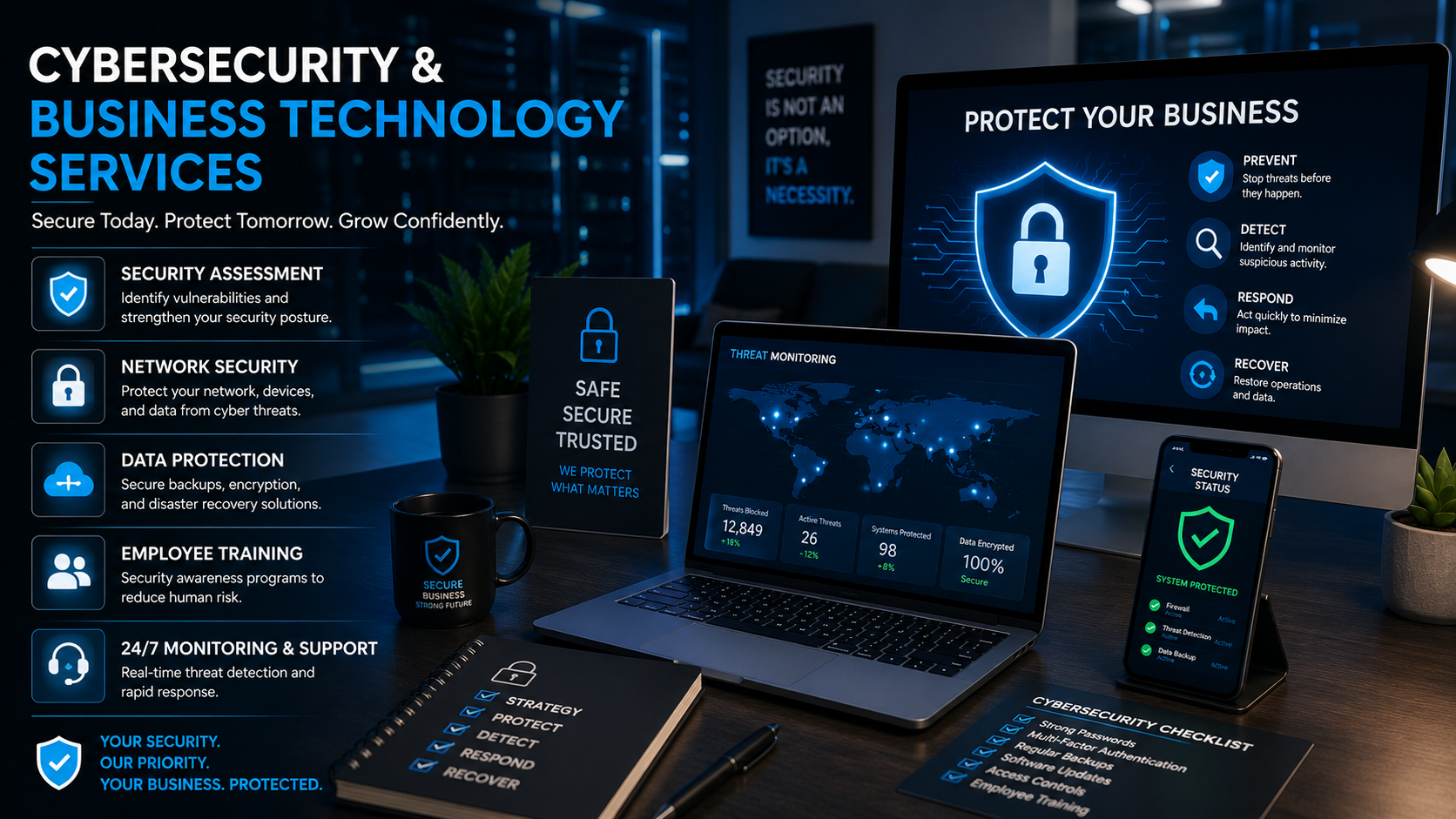
What can a small business cybersecurity service provide?
Depending on qualifications and legal requirements, a technology service provider could help businesses with areas such as:
- Security assessments
- Password-management setup
- Multi-factor authentication
- Backup planning
- Device security
- Software update management
- Employee security awareness
- Basic access-control reviews
- Website security checks
- Incident-response planning
- Security policy documentation
These services are valuable because cybersecurity is not simply a technology issue.
It is a business continuity issue.
Imagine a small company losing access to its email accounts for several days.
Or losing important files.
Or having a social media account taken over.
Or discovering that an employee’s account was compromised.
The direct financial cost may be significant.
The reputational damage can also be serious.
The market need is real
The U.S. National Institute of Standards and Technology released an updated draft in 2026 specifically addressing cybersecurity for non-employer small businesses. NIST noted that many such businesses are sole proprietors, freelancers, independent contractors, and other very small organizations with limited IT complexity.
That is important because these businesses may not need a giant cybersecurity system.
They may need basic security done correctly.
You need real skills here
This is one business where pretending to be an expert can be dangerous.
Do not sell advanced cybersecurity services without appropriate knowledge and qualifications.
You should understand concepts such as:
- Authentication
- Access control
- Encryption
- Backups
- Malware
- Phishing
- Network security
- Security monitoring
- Incident response
- Data protection
You also need to understand the laws and regulations relevant to the markets and industries you serve.
If you are not technically qualified, consider beginning with low-risk technology support or partnering with a qualified cybersecurity professional.
A simple opportunity: security for small businesses
There are millions of small businesses around the world.
Many do not need a complex enterprise security architecture.
They need someone who can help them answer basic questions:
Are our important accounts protected with multi-factor authentication?
Are former employees still able to access company systems?
Are important files backed up?
Are passwords being reused?
Do employees know how to recognize phishing attempts?
What should we do if an account gets hacked?
Those questions may sound simple.
They are not unimportant.
Trust is everything
Cybersecurity is a trust-based business.
A client is giving you access to systems and sensitive information.
You need strong professional ethics.
You need clear contracts.
You need appropriate access controls.
You should collect only the information you actually need.
And you should never claim that a business is “100% secure.”
No responsible professional can guarantee that.
The better promise is to help reduce avoidable risks and improve the organization’s security practices.
That is a much more honest business proposition.
- Sustainable and Energy-Related Businesses
The fifth opportunity is connected to one of the most fundamental needs in modern society: energy.
Businesses and households are paying attention to energy costs, efficiency, reliability, and environmental impact.
This creates opportunities across several industries.
Examples include:
- Solar installation
- Solar maintenance
- Energy audits
- Energy-efficient lighting
- Smart energy monitoring
- Battery-related services
- Sustainable packaging
- Energy-saving equipment
- Recycling services
- Water-saving products
- Sustainable household products
Not every opportunity requires becoming a large solar company.
Some entrepreneurs can build businesses around supporting services.
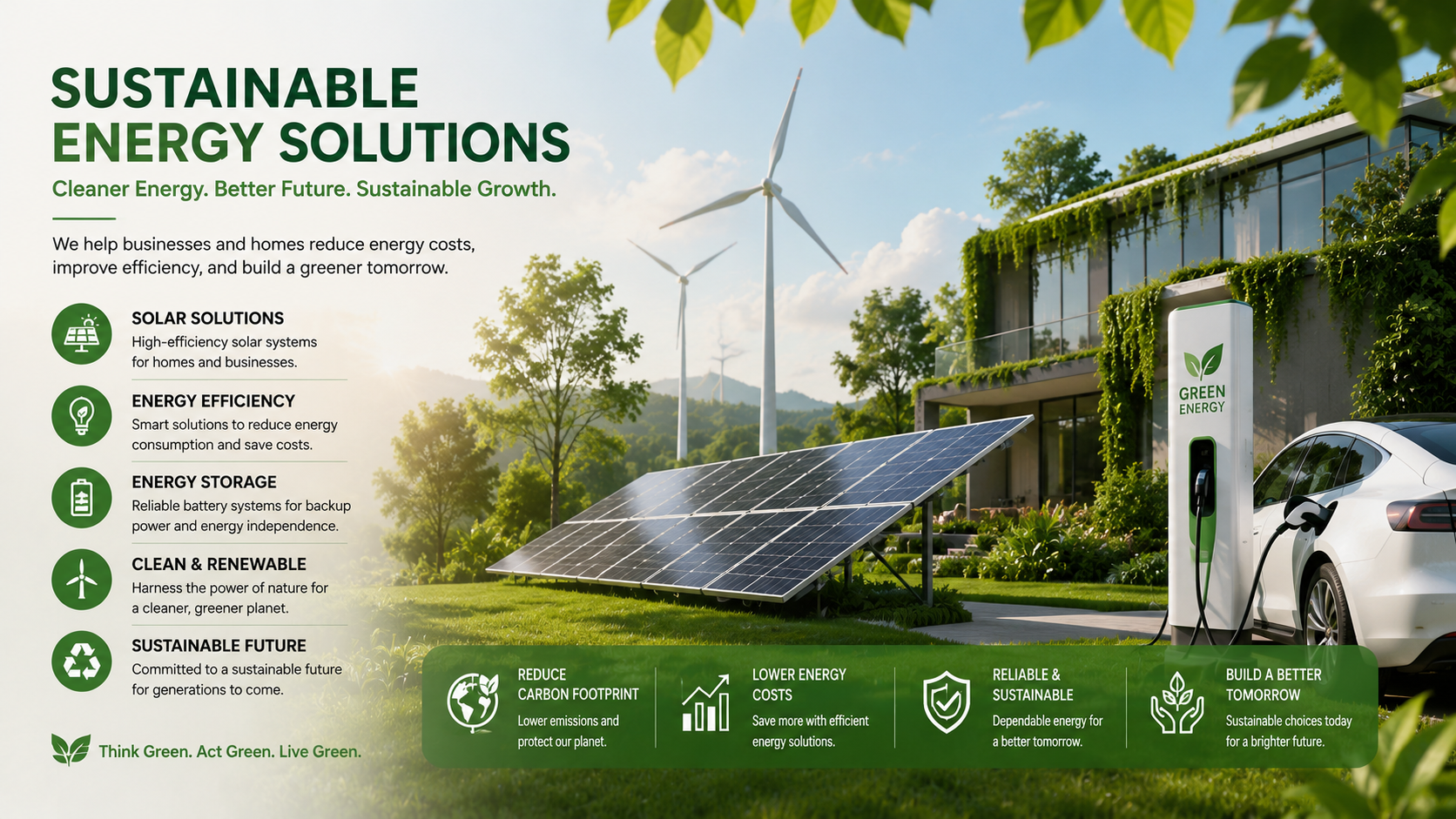
Energy efficiency can be a practical business
Consider a small commercial building.
The owner may be spending money on electricity every month.
The owner may not know which equipment is consuming the most energy.
An energy-efficiency service can assess usage and identify potential areas for improvement.
Possible recommendations could involve:
- Lighting
- Air-conditioning systems
- Insulation
- Equipment scheduling
- Temperature management
- Energy monitoring
- Efficient appliances
The exact recommendations should come from proper assessment rather than assumptions.
Solar businesses have multiple layers
People often think of solar business as simply installing solar panels.
The industry is broader.
There can be opportunities in:
- Installation
- Maintenance
- Cleaning
- Inspection
- Sales
- Site assessment
- System monitoring
- Battery solutions
- Financing assistance
- Commercial energy consulting
However, technical and electrical work may require licenses, certifications, permits, and compliance with local regulations.
That must be checked before starting.
Sustainable products
Another possibility is selling products that reduce waste or improve resource efficiency.
Examples could include:
- Reusable household products
- Durable alternatives to disposable products
- Refillable products
- Sustainable packaging
- Energy-efficient devices
- Recycled-material products
But there is a warning here.
Do not use “eco-friendly” simply as a marketing phrase.
If a product is advertised as sustainable, the claim should be supportable.
Consumers are becoming more informed, and misleading environmental claims can damage trust and create legal problems depending on the market.
Why this sector is interesting
Sustainability is increasingly connected to cost.
A business does not necessarily adopt an energy-efficient product simply because it wants to be environmentally responsible.
It may adopt it because the product reduces operating costs.
That creates a stronger business case.
A good entrepreneur should therefore focus on measurable value.
Instead of saying:
“Our product is green.”
Explain:
“This solution is designed to reduce waste,”
or
“This system can help monitor energy consumption.”
Then provide evidence where appropriate.
Which of These Five Businesses Is Best?
There is no universal answer.
The best business depends on your skills, available capital, location, network, and ability to solve a specific problem.
Here is a simple way to think about the five opportunities.
| Business | Starting Cost | Skill Requirement | Scalability | Main Challenge |
| AI Business Services | Low to Medium | Medium to High | High | Competition and quality |
| Niche E-commerce | Medium | Medium | High | Inventory and marketing |
| Digital Marketing | Low | Medium | High | Finding and retaining clients |
| Cybersecurity Services | Low to Medium | High | High | Expertise and trust |
| Sustainable/Energy Services | Medium to High | Medium to High | High | Equipment, regulation and technical work |
If you have very little capital but strong digital skills, AI services or digital marketing may be easier to start.
If you understand products, branding, and online sales, e-commerce may be attractive.
If you have technical expertise, cybersecurity can offer a valuable professional service.
If you have access to technical workers, equipment, or capital, energy-related businesses may provide larger project opportunities.
The important point is that starting difficulty and earning potential are not the same thing.
A business that costs $500 to start may require years of skill development.
A business requiring $50,000 may have stronger revenue potential but also much greater financial risk.
How to Choose the Right Business for You
Before spending money, answer these seven questions.
- What do I already know?
Your existing knowledge can reduce the learning curve.
If you have worked in retail, you may understand customers and suppliers better than someone starting from zero.
If you have a technology background, a technology business may make more sense.
- What problem can I solve?
Do not begin with a product.
Begin with a problem.
Find something people complain about.
Find something they currently spend money to solve.
Find something that wastes their time.
That is where business opportunities often begin.
- Who is the customer?
“Everyone” is not a target market.
A better target could be:
“Independent restaurants with fewer than 20 employees.”
Or:
“Online clothing brands doing between $10,000 and $100,000 in monthly sales.”
A specific customer is easier to understand and serve.
- How much can I afford to lose?
This is a critical question.
Never invest money you cannot afford to lose in an untested business idea.
Start with a manageable experiment.
- Can I get my first customer?
Before building a complicated website, buying large inventory, or renting an office, test whether someone will actually pay.
A paying customer provides more useful information than hundreds of social media likes.
- Can the business survive competition?
Competition is not automatically bad.
It can actually prove that customers exist.
The real question is:
Why would customers choose you?
Maybe your service is faster.
Maybe your product is better designed.
Maybe your customer support is better.
Maybe you specialize in one industry.
Maybe you offer better educational content.
You need a reason.
- Can I operate the business consistently?
A business is not just an idea.
It is a system of repeated actions.
Marketing.
Sales.
Delivery.
Customer support.
Accounting.
Product improvement.
Quality control.
If you cannot maintain those activities, the idea will remain an idea.
A Smarter Way to Start in 2026
One of the biggest lessons for new entrepreneurs is simple:
Do not build too much before proving demand.
You do not need a perfect logo.
You do not need a huge office.
You do not need 50 products.
You do not need a massive advertising budget.
You need evidence that someone wants what you are offering.
Start small.
Talk to potential customers.
Study competitors.
Create a simple offer.
Try to make your first sale.
Then improve the business based on what customers actually tell you.
This approach can reduce unnecessary spending.
It also forces you to confront reality.
Maybe customers do not want the product.
That is useful information.
Maybe they want a different version.
Also useful.
Maybe they love the product but think your price is too high.
Now you have something specific to investigate.
Business success rarely comes from getting everything right on the first attempt.
It often comes from learning faster than competitors.
Final Thoughts
The business world in 2026 is full of opportunities, but it is also full of noise.
Every week, a new trend appears.
One week it is artificial intelligence.
The next week it is dropshipping.
Then another business model becomes popular on social media.
Following every trend can leave an entrepreneur constantly starting and never building.
A better strategy is to look for durable customer needs.
People will continue to need products.
Businesses will continue to need customers.
Companies will continue to need technology.
Digital systems will continue to require security.
Organizations will continue to look for ways to reduce costs and improve efficiency.
Those needs create opportunities.
The five businesses discussed in this article are not guaranteed paths to wealth. They are areas where current business activity and technology trends suggest meaningful opportunities exist.
AI-powered services can help companies work more efficiently.
Niche e-commerce can connect specialized products with specific customers.
Digital marketing can help businesses compete for attention.
Cybersecurity services can help small organizations manage growing digital risks.
Sustainable and energy-related businesses can address efficiency, resource use, and changing consumer and business priorities.
Current U.S. business data shows that AI adoption remains an important part of the changing business environment, while organizations are also paying attention to security, operational efficiency, and technology investment.
But technology alone does not build a successful company.
People do.
The entrepreneur who listens to customers, controls costs, delivers consistently, learns from mistakes, and builds trust has a much stronger foundation than someone simply chasing the latest trend.
So, if you are thinking about starting a business today, do not ask only:
“What is the hottest business?”
Ask a better question:
“What valuable problem can I solve, for whom, and why would they pay me to solve it?”
That is where a real business begins.
And in 2026, the opportunity may not belong to the person who follows the biggest trend.
It may belong to the person who takes an existing problem, combines it with modern technology, and solves it in a simpler, faster, more trustworthy way.
Like the many of the different types of movies nominated for the Best Picture award, Shutterstock says its posters share a theme of endurance and testing how far you can stretch the lengths of human nature.

